2025 Year Research Review
~2.1k tokens
Introduction
I have been working on several interesting projects, and some of them may come to fruition this year. Unfortunately, because the groups in our environment are relatively small, progress has been slower than expected. The tasks have also become harder, with fewer options to expand the work or speed things up. Instead of having six or seven people working in parallel, most efforts have been carried by much smaller teams.
This year I worked on projects such as:
-
Brain injury detection from CT scans using bounding boxes
Team: 3 students (including me), 1 PhD student, 1 professor, and 1 clinical staff member. -
Water simulations at the electronic-structure level
Team: 1 student (me) and 2 PhD students. -
Faster convergence of slow protein modes
Team: 1 student (me). -
Exploring Alzheimer’s therapies using small-molecule models
Team: 7 students (including me).
Simulations
The simulations ran throughout the year, and the main results should be ready in the coming months. The care and attention to accuracy in these experiments has been substantial. I am also grateful that tools like LLMs exist, because they make literature and information search dramatically faster. Along the way, I had to learn a lot of new things, including:
SLURM
Making jobs efficient is a non-trivial game. It is surprisingly easy to write a script that works "most of the time" and annoyingly hard to make one that runs reliably on the first attempt, especially at scale. A strong pattern is to test locally first, then run a small integration test on the cluster before committing to week-long runs.
A colleague put it like this:
No, I mean, of course, I ran most of the tests locally. But before I launch computations that will run for a week, I’d rather first run a larger integration test on the cluster, one that’s big enough to check that everything works, but small enough to finish in at most a few to a dozen minutes, just to be sure everything works on the cluster.
He also prefers developing with the Nix package manager to keep environments reproducible. I follow the same spirit, but in my case mostly through incremental scripts with safety checks. The goal is simple: if something goes wrong, it should fail early and loudly, rather than silently derailing the workflow hours or days later.
HPC
Queue systems and priority policies were a learning curve, and honestly a frequent source of frustration. You also have to estimate resources in advance: memory, time limits, CPU versus GPU, and how parallelism should be expressed.
A basic SLURM job script looks like this:
#!/bin/bash
#SBATCH --job-name=myjob
#SBATCH --partition=cpu
#SBATCH --nodes=1
#SBATCH --ntasks=1
#SBATCH --cpus-per-task=16
#SBATCH --time=04:00:00
#SBATCH --mem=32G
#SBATCH --output=logs/%x_%j.out
#SBATCH --error=logs/%x_%j.err

set -euo pipefail

# Make thread-based libs respect Slurm allocation
export OMP_NUM_THREADS=$SLURM_CPUS_PER_TASK
export MKL_NUM_THREADS=$SLURM_CPUS_PER_TASK
export OPENBLAS_NUM_THREADS=$SLURM_CPUS_PER_TASK
export NUMEXPR_NUM_THREADS=$SLURM_CPUS_PER_TASK

# Run your program
srun python my_script.py
Molecular dynamics (MD)
The more time I spend with MD software, the more I see the tradeoff: it is powerful, but it can be fragile. Even when the software "helps" by warning you, you still need enough understanding to choose the right approach for the specific physical question. Force fields and simulation parameters are not plug-and-play. They require careful choices, validation, and consistent handling.
Quantum structure theory
I also had to build intuition for the core ideas, what the methods actually approximate, and what kinds of results are realistic to expect. Without that, it is easy to misread outputs or trust numbers that look precise but are not meaningful.
Shell and Bash scripting
A lot of the real work ended up being glue: writing scripts that make runs reproducible, safe, and easy to restart, and that turn raw outputs into clean results.
Results
In the end, we produced solid work, but it took a long time. The path was hard largely because so many things were new to me, and because producing results that the community will respect requires discipline. The bar can feel low in some places, but the standard for trustworthy results is still high, and it is worth aiming above the minimum.
Brain
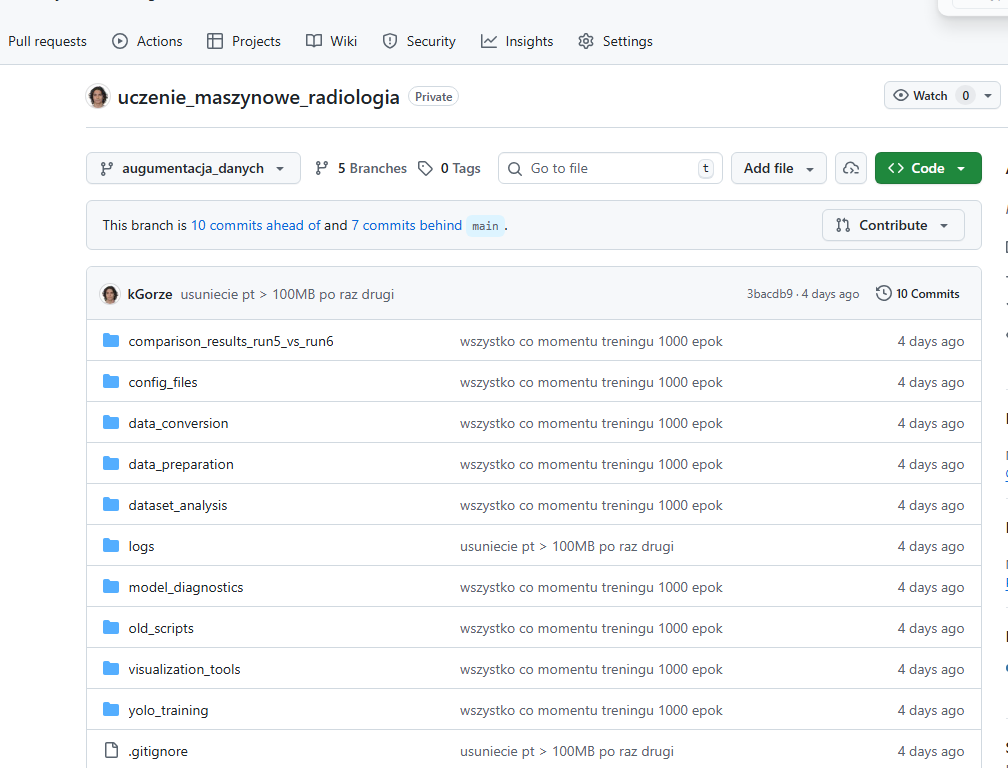
Working on brain injury detection has been a strong machine learning lesson, mostly because it forced me to confront the unglamorous parts: MLOps, workflow design, data curation, and making sure the model behaves correctly at inference time.
I learned how to obtain the data and shape it into something that can actually support the features we want to predict. This matters more than people like to admit, because for many ML projects the hardest part is not the model. It is finding, cleaning, and structuring data that truly matches the problem.
Training brought the usual set of issues: stability, correctness, and the constant tradeoffs between augmentation, hyperparameters, and architecture choices. In fact, architecture search became our main experimental focus. We have a set of valid experiments in place, and we should be able to produce solid results later this year, first as an article and possibly later as a poster to share the work more broadly.
Protein exploration
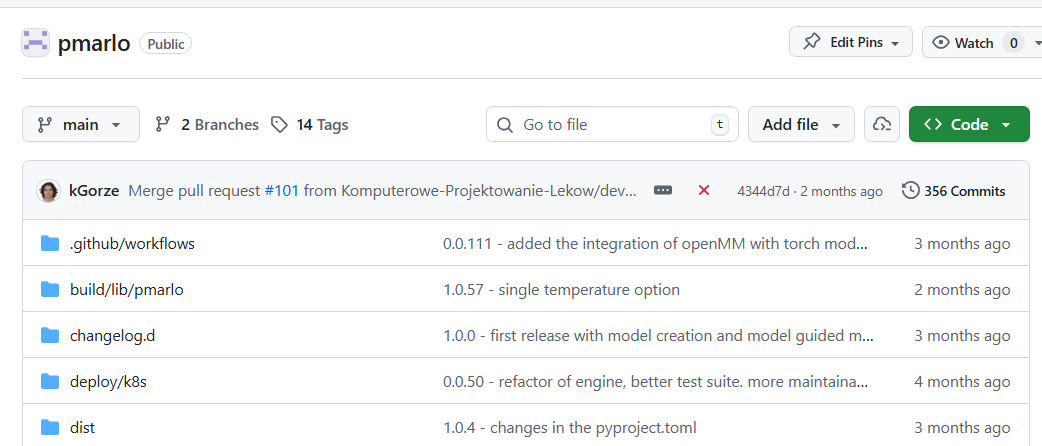
The original goal was to find a combination of methods that would enable better sampling of conformational space using machine learning. The project slowed down, mostly because of the hurdles that still need to be cleared, from infrastructure and compute availability, to validation strategy, to framing the problem in a way that is both precise and testable. The main blockers were: - Resources and infrastructure: more GPUs are needed to train and evaluate models properly. - Validation: defining what “better sampling” means in measurable terms, and proving it reliably. - Problem formulation: turning an interesting idea into a well-posed research question with clear success criteria. In this kind of work, the hardest and most essential part is building the boring foundation: strong baselines and clean experiments. Without those, results are not interpretable. - Baselines - Experiments
I hope this will improve soon, and I would also be happy to have others contribute.
And yes, I still remember the 360 commits from the holidays through December.
Alzheimer’s drug pipeline
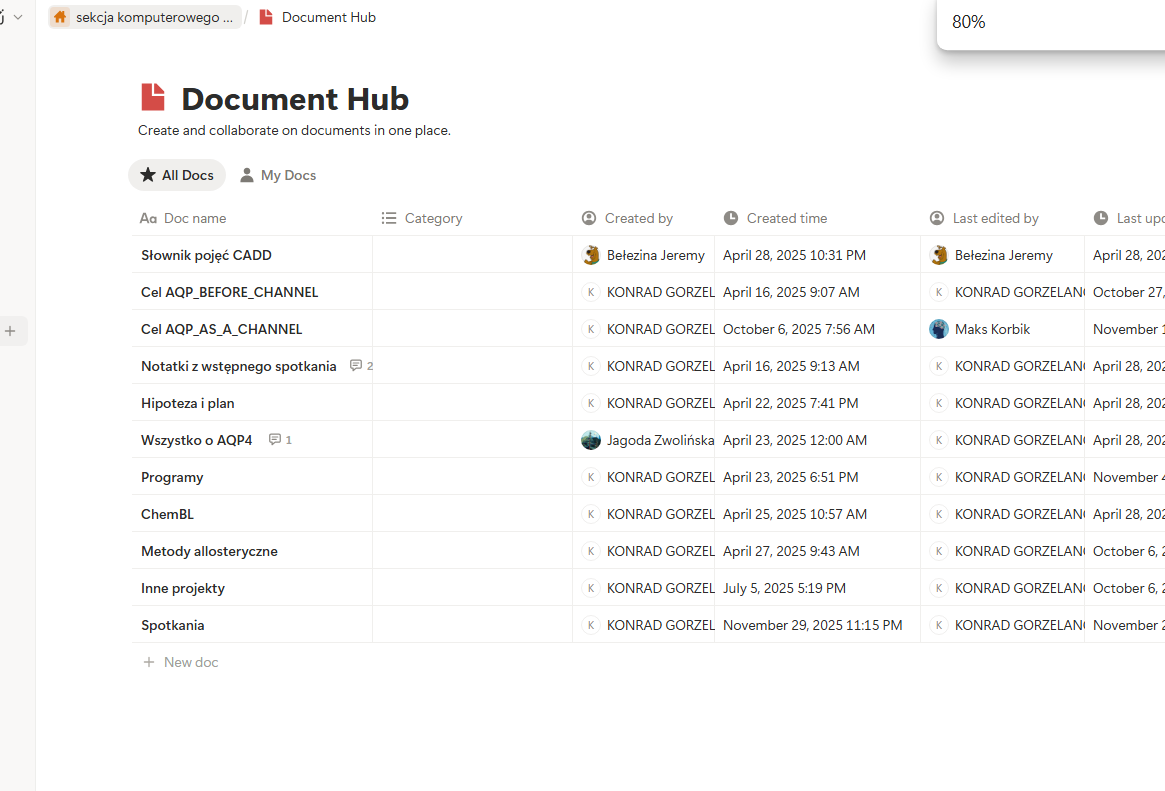
This project also paused, mainly because of limited resources. To take it further, I will need grant support. It is one of the biggest opportunities on my current path, and it may be worth focusing more of my career energy here. Alzheimer’s is a problem that demands serious effort, and cross-domain lessons can actually transfer in useful ways. Skills from training computer vision models, experience from water simulations, and a stronger physical chemistry background in formulating the underlying math all feed into building a pipeline that is more than a one-off experiment. The goal is to make it an asset: a reusable, extensible research workflow rather than a single isolated result.
Future
That wraps up my 2025 research in review. I am starting to gain more confidence in my work, and I have been getting a lot of inspiration from other people. Cutting-edge research used to be something I only read about in papers, which is why 2025 felt surreal at times.
I am grateful to have met so many supportive mentors at PUT and in the broader online community, as well as collaborators I was lucky to work with early in my research career. They genuinely strengthened my motivation and my interest in this field.
I am looking forward to what the next year brings, and to seeing which projects come to fruition. I hope the outcomes will be meaningful, and that they will contribute to work that is worth building on, for our generation and the ones after us.
I will keep thinking.